Last update: April 26, 2025
Rhodiola: The Complete Guide
Explore the science-backed health benefits of rhodiola. From stress reduction to improved mood, learn how this adaptogenic herb may support your overall health.

By Derick Rodriguez, Associate Editor
Edited by Dr. Dimitar Marinov, MD, RDN, PhD
Key takeaways
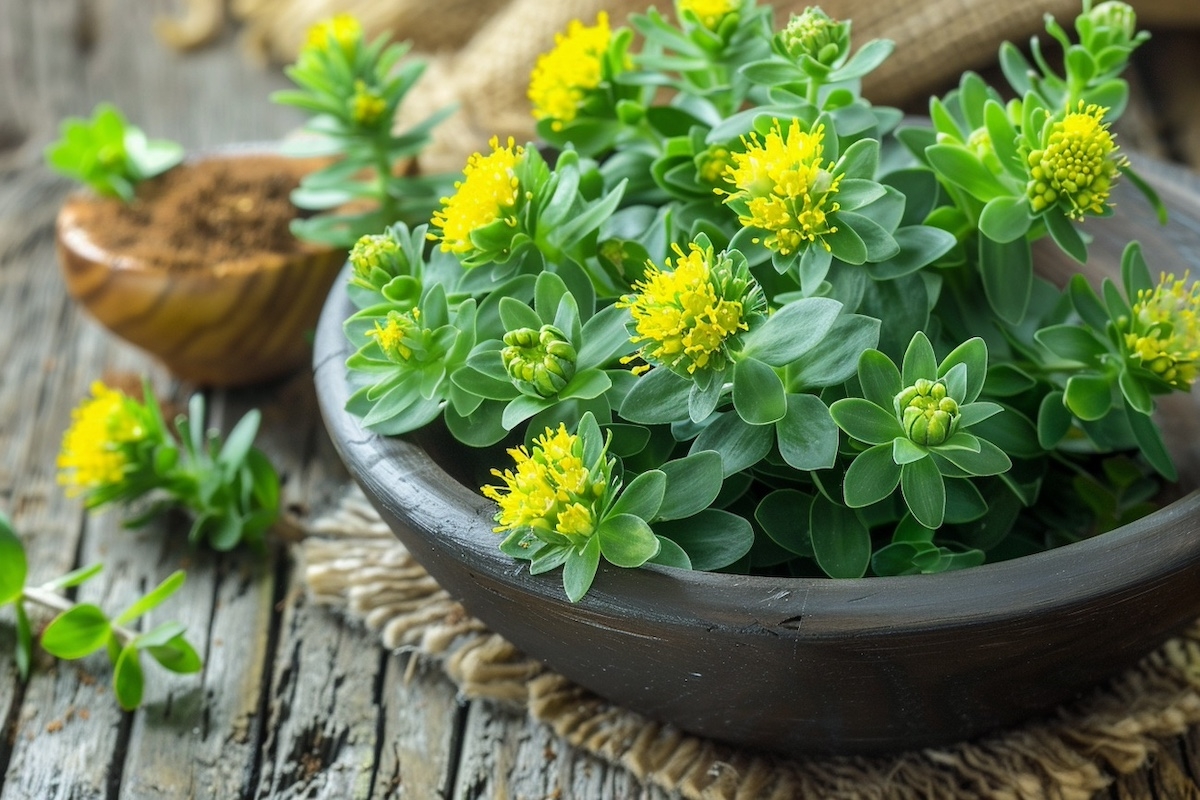
- Rhodiola is a perennial flowering plant native to the cold regions of Europe and Asia.
- Rhodiola is widely used as a dietary supplement for its many health benefits.
- Rhodiola’s roots contain over 140 active ingredients, with rosavin and salidroside as key compounds.
- It’s considered an adaptogen, which is a substance that helps the body handle physical and mental stress.
What is Rhodiola?
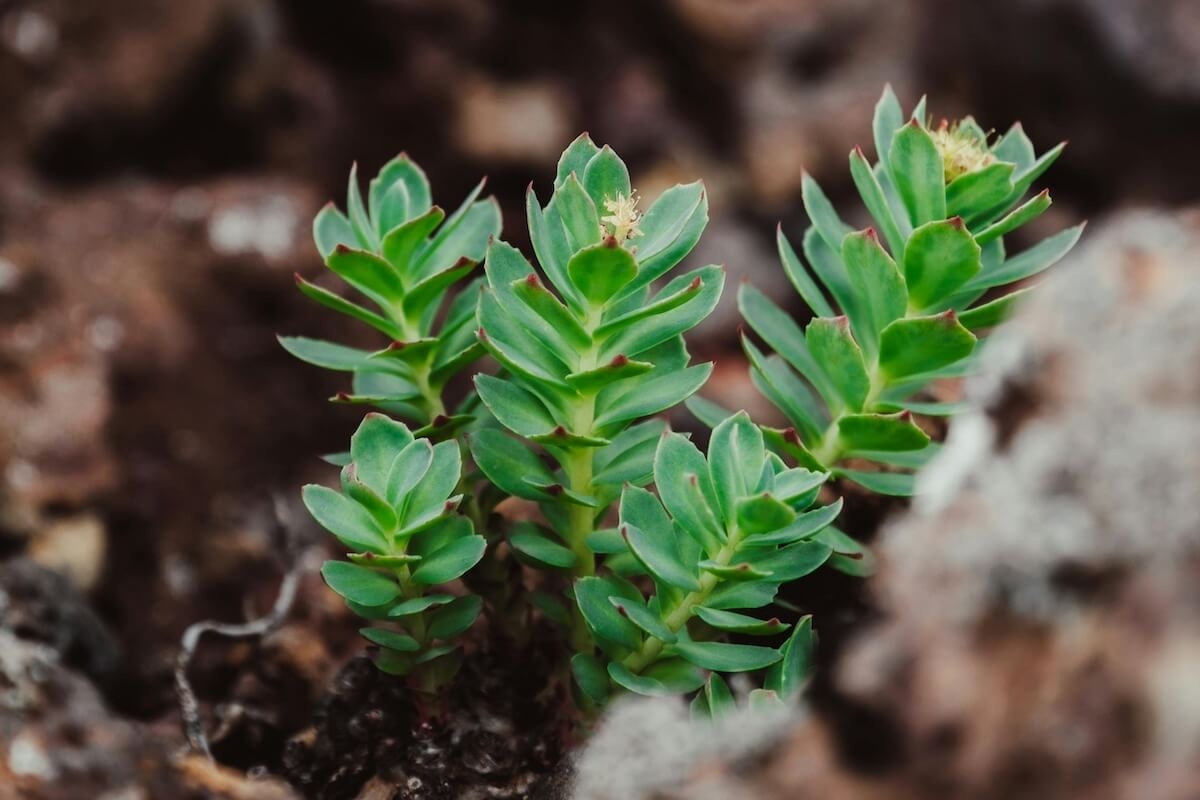
Rhodiola rosea is a perennial flowering plant that grows naturally in the cold, mountainous regions of Europe and Asia. While it is often referred to as a supplement, it's important to note that the supplement form is derived from the roots of the plant itself.
As a plant, Rhodiola rosea has been used for centuries in traditional medicine practices. The plant's roots are typically harvested, dried, and then used to create various herbal preparations. However, in modern times, Rhodiola rosea is most commonly consumed as a dietary supplement. The roots of the plant are extracted and standardized to contain specific amounts of active compounds, like rosavin and salidroside, which are believed to be responsible for the plant's adaptogenic properties.
Used by the Vikings
Rhodiola rosea is believed to have been used by Vikings to enhance their physical strength and endurance during long sea voyages and in battle.
Rhodiola contains over 140 active compounds that exert powerful health benefits. Rhodiola supplements are often used to promote general well-being and to help the body adapt to stress. Some studies have investigated the potential benefits of Rhodiola rosea supplements for reducing fatigue, improving mental performance, and supporting a healthy mood [1, 2].
Different types of Rhodiola
Yes, there are several different species of rhodiola, each with its own unique characteristics and potential benefits. Here are four different types of Rhodiola, each with its own unique characteristics and potential benefits:
- Rhodiola rosea: Known for its high content of rosavins and salidroside, which are believed to be the primary active compounds responsible for its adaptogenic effects. Rhodiola rosea is the most extensively studied species and is widely used in commercial supplements.
- Rhodiola crenulata: Compared to Rhodiola rosea, this species has a higher content of salidroside and tyrosol, as well as unique compounds like lotaustralin and rhodiosin. These differences in chemical composition may contribute to its potential benefits for altitude sickness and cardiovascular health.
- Rhodiola imbricata: Characterized by the presence of unique phenolic compounds, like gossypetin and rhodioflavonoside, which are not found in significant amounts in other Rhodiola species. These compounds may play a role in the potential neuroprotective effects of Rhodiola imbricata.
- Rhodiola kirilowii: Contains a unique combination of compounds, including salidroside, tyrosol, and the flavonoid epicatechin. Rhodiola kirilowii also has a higher content of polysaccharides compared to other Rhodiola species, which may contribute to its potential immunomodulatory effects.
While these differences in chemical composition may seem subtle, they can influence the specific effects and potential benefits of each Rhodiola species.
How does Rhodiola work in your body?
- Rhodiola is typically ingested in the form of capsules or tablets.
- Once consumed, Rhodiola undergoes digestion primarily in the stomach and small intestine where the capsules or tablets are broken down.
- Active compounds such as rosavin and salidroside from Rhodiola are absorbed into the bloodstream during the digestive process.
- Rhodiola may cross the blood-brain barrier, which allows it to impact central nervous system functions directly.
- Rhodiola influences key neurotransmitters like serotonin, dopamine, and norepinephrine, affecting mood and stress response.
- The adaptogenic properties of Rhodiola enhance the body’s resistance to stress, primarily by affecting the hypothalamus-pituitary-adrenal (HPA) axis.
- After exerting its effects, Rhodiola is metabolized in the liver where it is transformed into various byproducts.
- The breakdown products of Rhodiola are excreted through urine and feces, completing the elimination process from the body.
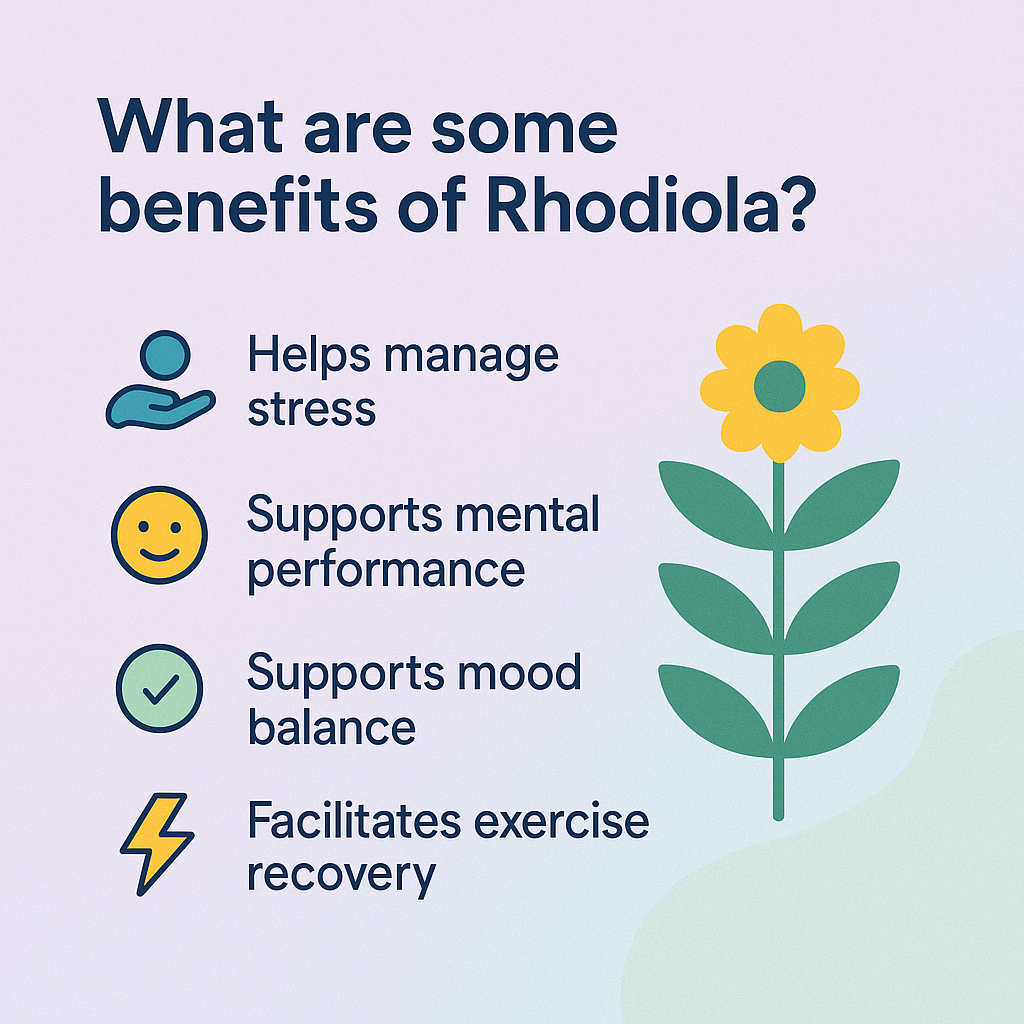
What are some benefits of Rhodiola?
Rhodiola contains various properties that may contribute to overall well-being.
Helps manage stress
Rhodiola acts as an adaptogen, enhancing the body's resilience to stress and improving coping mechanisms. It may mitigate the impact of both physical and psychological stressors, promoting overall well-being [6].
Supports mental performance
Studies suggest that Rhodiola has the potential to enhance cognitive function, contributing to improved mental performance during mentally taxing situations. While more research is needed, these findings indicate positive effects on learning and memory [6].
Supports mood balance
Rhodiola has been linked to potential antidepressant properties, influencing neurotransmitters associated with mood and emotion. Research indicates positive effects on symptoms of depression, with a favorable side effect profile [6].
Facilitates exercise recovery
Some studies suggest that Rhodiola may enhance sports recovery by reducing pain and muscle damage [7].
Where is Rhodiola rosea found?
Rhodiola rosea grows naturally in the cold, mountainous regions of Europe, Asia, and North America. It is well-adapted to harsh climates and can be found at high altitudes. This plant can be found in the following areas:
- North America: In North America, Rhodiola rosea grows in the cold regions of Alaska, Canada, and the Rocky Mountains of the United States.
- Europe: In Europe, Rhodiola rosea grows in the mountainous regions of Scandinavia, Iceland, the British Isles, and the Alps. It is particularly abundant in countries like Norway, Sweden, and Russia.
- Asia: Rhodiola rosea is native to the mountainous regions of Siberia, the Altai Mountains, and the Tibetan Plateau. It is found in countries like Russia, China, Mongolia, and Kazakhstan.
- Arctic region: Rhodiola rosea is commonly found in the Arctic regions of Europe, Asia, and North America. It thrives in the cold, harsh conditions of these areas.
While Rhodiola rosea is found naturally in these regions, it is also cultivated commercially for use in dietary supplements. The roots of the plant are harvested, dried, and then extracted to produce standardized Rhodiola rosea supplements.
Delivery methods
Rhodiola supplements come in various delivery methods, each offering its own set of benefits and ways of consumption. Here's a brief overview of the different delivery methods:
Capsules are a convenient and easy-to-swallow delivery method for supplements that provide a pre-measured dose. They are particularly beneficial for individuals who may not enjoy the taste of the supplement in its natural form or when taken as a powder or liquid. Capsules are also portable and discreet, making them easy to take while traveling or on the go.
One of the main advantages of capsules is that they eliminate the need for measuring doses, which can be time-consuming and may lead to inconsistencies in dosage. The pre-measured nature of capsules ensures that the individual takes the same amount each time, making it easier to monitor and maintain a consistent supplementation routine.
Tablets are a convenient and easy-to-swallow form of supplement that offers a pre-measured dose. They eliminate the need for measuring, making them ideal for those who find measuring doses inconvenient. Tablets are also portable and discreet, allowing for easy consumption on the go.
One of the main benefits of tablets is their ease of use. They can be quickly swallowed with water, making them a simple and efficient way to incorporate supplements into a daily routine.
Soft gels are a type of capsule that contains a liquid form of the vitamin or supplement. They are easy to swallow and provide a pre-measured dose. Soft gels are known for their fast absorption rate, as the liquid content is quickly released and absorbed by the body.
This delivery method is particularly beneficial for individuals who have difficulty absorbing nutrients from traditional pills. Soft gels are also easy to digest and gentle on the stomach, making them a good choice for those with sensitive digestive systems. However, it's important to store soft gels properly, as they are more susceptible to degradation from heat and light compared to other delivery methods.
Chewable supplements are a convenient and enjoyable delivery method, particularly for those who have difficulty swallowing pills. They come in various flavors, making them more palatable and easier to consume. Chewables are often formulated to provide a pre-measured dose, ensuring consistent intake.
Chewable supplements are a good option for children or adults who prefer a tasty alternative to traditional pills. However, some chewable supplements may contain added sugars or artificial flavors, so it's essential to read the ingredient list carefully and choose a reputable brand.
Powdered vitamins and supplements offer versatility in consumption. They can be easily mixed into various beverages or foods, such as smoothies, juices, or yogurt, allowing for customization based on individual taste preferences. Powders are often more economical compared to other delivery methods, as they typically provide a larger number of servings per container.
They also allow for flexible dosing, enabling individuals to adjust the amount consumed according to their needs or as directed by a healthcare professional.
However, measuring the correct dose of powdered supplements requires the use of a scoop or scale, which may be less convenient compared to pre-measured options like tablets or capsules.
Liquid extracts are a concentrated form of a supplement that offer fast absorption and flexible dosing. The liquid form allows for quick absorption into the bloodstream, potentially leading to faster effects compared to capsules or tablets. The dropper enables precise dosage adjustments, making it easier to tailor the amount consumed to individual needs or as directed by a healthcare professional.
Liquid extracts may also provide enhanced bioavailability, as some may contain additional compounds or solvents that improve the absorption and utilization of the active ingredients in the body. However, they may have a strong taste that some individuals find unpleasant, and they require careful attention to dosage to avoid consuming too much of the supplement.
Proper storage is essential to maintain the quality and potency of liquid extracts, as exposure to light, heat, or air can degrade the active ingredients over time.
Choose a method that fits your routine
Do not overlook the delivery method. Rhodiola supplements come in tablets, capsules, soft gel, chewable, powders, and liquid forms—choose the one that best fits your daily routine to stay consistent.
What to look for in Rhodiola supplements
When selecting a supplement, several key factors must be considered to ensure you choose a high-quality product that effectively supports your health goals and overall well-being.
Dosage and potency
The dosage of Rhodiola in supplements varies, so it's important to choose one that aligns with your specific needs. This includes considering your age, gender, and health status, like pregnancy or existing deficiencies. The Rhodiola formulation can impact its potency and bioavailability, which affects how effectively your body can absorb and use it.
Quantity and delivery method
The delivery method is crucial. Rhodiola supplements come in various forms, including tablets, capsules, powders, chewables, and liquid forms. Your choice may depend on factors like ease of swallowing, convenience for traveling, or personal preference regarding taste and texture. Also, evaluate the quantity of Rhodiola to determine how long it will last based on your daily requirements.
Quality and manufacturing
Quality is paramount when selecting Rhodiola supplements. Look for products manufactured under strict quality control guidelines and those that have undergone third-party testing for purity and label accuracy. Certifications from recognized bodies can be a reliable indicator of a high-quality product. Additionally, consider the manufacturer's reputation and transparency in their production processes.


What time of day should you take Rhodiola?
Knowing what time of day to take Rhodiola can significantly influence how quickly you feel its adaptogenic support. Because it acts as an energizing adaptogen, the best time to take Rhodiola for most people is first thing in the morning, on an empty stomach.
Taking 200–400 mg about 30 minutes before breakfast helps ensure rapid absorption and delivers a gentle lift in mood and alertness as you start your day.
If you’re looking to optimize your Rhodiola rosea dosage, splitting up amounts around workouts can be effective. Consuming 100–200 mg roughly 30 minutes before training may enhance endurance, reduce perceived exertion, and help stabilize mood during demanding sessions.
As with any supplement, start low and gradually adjust while monitoring for Rhodiola side effects, like jitteriness or digestive discomfort. Although some research suggests when to take Rhodiola might even include afternoon use for acute stress events, it’s generally not recommended right before bedtime.
Does Rhodiola make you sleepy?
Because the herb also has stimulating properties, taking it too late in the day can interfere with sleep or provoke vivid dreams. If you’re curious about evening dosing, start with a lower amount earlier in the afternoon and track your response before moving closer to night.
How and when should you take Rhodiola for maximum absorption?
To get the most out of your Rhodiola supplement, it's crucial to consider the timing and method of consumption. The following dos and don'ts offer guidance on optimizing absorption, efficiently supporting your health and wellness, and minimizing potential discomfort.
Do’s

Take Rhodiola on an empty stomach.
Swallow capsules with water for better absorption.
Consider taking it in the morning or early afternoon.
Don’ts

Avoid taking Rhodiola before bedtime.
Do not crush or chew Rhodiola capsules.
Avoid taking Rhodiola with other stimulants.
Who should take Rhodiola?
Taking Rhodiola supplements has its potential benefits, but it may not be for everyone.
- People Experiencing Chronic Stress: Rhodiola's adaptogenic properties might aid those facing prolonged stress, promoting resilience and improved coping mechanisms.
- People Dealing with Stress-Related Fatigue: If you often feel physically or mentally tired, Rhodiola’s adaptogenic nature may help alleviate fatigue symptoms and enhance energy levels.
- People Struggling with Symptoms of Depression: While not a substitute for medical treatment, Rhodiola may offer support for those experiencing symptoms of depression, contributing to a more balanced mood.
- People Seeking Cognitive Enhancement: Rhodiola has shown potential in improving brain function, making it a consideration for people looking to boost mental performance and focus.
- Athletes and Fitness Enthusiasts: Rhodiola's purported ability to reduce pain and muscle damage makes it of interest to those involved in physical activities.
- Pregnant and Nursing Women: Limited research exists on the effects of Rhodiola during pregnancy or breastfeeding, so it's advisable for these people to consult with a healthcare professional [8].
- Children: The safety of Rhodiola supplements in children hasn't been extensively studied. Consulting a healthcare provider is crucial before considering its use for minors.
- People with Pre-existing Medical Conditions: People with known medical conditions, especially those affecting the cardiovascular system or hormonal balance, should seek medical advice before using Rhodiola.
- People on Medications: Rhodiola might interact with certain medications such as blood thinners. Those on prescription drugs or undergoing medical treatments should consult with their healthcare provider before supplementing with Rhodiola.
- Allergic Reactions: People with known allergies to plants in the Crassulaceae family, to which Rhodiola belongs, should avoid Rhodiola supplements.
Recommended dosage
Rhodiola can provide many benefits so long as you take the recommended daily amount. Here are the recommended doses for Rhodiola across various age groups.
Adults
- Typically, Rhodiola is supplemented at 100-600 mg daily for up to 12 weeks.
Side effects of excessive Rhodiola consumption
While Rhodiola supplements are generally safe when taken within recommended limits, excessive intake can have adverse effects:
- Dizziness
- Dry mouth
- Excessive saliva production
Always consult your doctor
If you're experiencing side effects, consult your healthcare provider. They may recommend a different Rhodiola formulation or adjust your dosage. Balancing your Rhodiola needs with any discomfort is crucial and should not be overlooked.
New clinical findings
On March 2, 2025, Frontiers in Pharmacology published a systematic review and meta-analysis assessing standardized Rhodiola rosea injection for left ventricular remodeling and inflammation in patients with heart failure with reduced ejection fraction (HFrEF), reporting promising anti-inflammatory and anti-fibrotic effects.
Health made easy: your go-to resource for essential vitamins and supplements


Frequently asked questions about Rhodiola (FAQ)
Our library of expert-authored articles covers just about every question you might have about vitamins, minerals, and supplements — along with some you might not have known you had.
Rhodiola supplements, made from the Rhodiola rosea plant, are safe for vegetarians and vegans as they don't contain any animal ingredients. It's important to check product labels since some supplements might have things like non-vegetarian capsules or extra things in them.
In general, it's okay to take Rhodiola supplements every day, due to its adaptogenic properties, as long as you follow the recommended amounts. But everyone reacts differently, so it's a good idea to talk to a healthcare professional before making it a part of your daily routine, especially if you have health issues or take other medications.
Rhodiola rosea is not a weight loss supplement and there is no data to suggest it helps with weight loss.
Avoid combining Rhodiola with other stimulants, like high-dose caffeine or ephedra, to prevent overstimulation. Additionally, talk to your doctor before using it alongside antidepressants (MAO inhibitors, SSRIs), blood thinners, or diabetes and blood-pressure medications due to potential interactions.
Keep your Rhodiola supplements in a cool and dry spot, away from sunlight, heat, and moisture. Make sure to seal the container tightly after using it, and don't freeze the supplements. Keep them away from strong smells, check the expiration date, and follow any storage instructions from the manufacturer to keep them strong and of good quality.
Rhodiola rosea is not likely to directly make you sleepy, as it is more known for its stress-reducing and energy-boosting effects. While it may indirectly support better sleep by helping your body adapt to stress and reducing fatigue, the stimulating properties of Rhodiola could potentially make it more difficult for some individuals to fall asleep, especially if taken too close to bedtime.
It is generally recommended to take Rhodiola supplements earlier in the day, such as in the morning, to avoid interfering with sleep. By taking it during the daytime, you may experience the benefits of improved stress management and reduced tiredness without negatively impacting your sleep quality. However, individual responses to Rhodiola can vary, so some people might not notice any sleep disturbances even when taking it later in the day.
Yes. Rhodiola supplements are generally recommended to be taken on an empty stomach, preferably before meals, to boost absorption. This helps your body get the most out of its benefits.
Most people experience the greatest benefit when they take Rhodiola in the morning to harness its energizing adaptogenic effects without impacting sleep. Because it can also stimulate alertness and even provoke vivid dreams, it’s best to avoid dosing close to bedtime.
Rhodiola supplements, made from the Rhodiola rosea plant, are safe for vegetarians and vegans as they don't contain any animal ingredients. It's important to check product labels since some supplements might have things like non-vegetarian capsules or extra things in them.
Keep your Rhodiola supplements in a cool and dry spot, away from sunlight, heat, and moisture. Make sure to seal the container tightly after using it, and don't freeze the supplements. Keep them away from strong smells, check the expiration date, and follow any storage instructions from the manufacturer to keep them strong and of good quality.
In general, it's okay to take Rhodiola supplements every day, due to its adaptogenic properties, as long as you follow the recommended amounts. But everyone reacts differently, so it's a good idea to talk to a healthcare professional before making it a part of your daily routine, especially if you have health issues or take other medications.
Rhodiola rosea is not likely to directly make you sleepy, as it is more known for its stress-reducing and energy-boosting effects. While it may indirectly support better sleep by helping your body adapt to stress and reducing fatigue, the stimulating properties of Rhodiola could potentially make it more difficult for some individuals to fall asleep, especially if taken too close to bedtime.
It is generally recommended to take Rhodiola supplements earlier in the day, such as in the morning, to avoid interfering with sleep. By taking it during the daytime, you may experience the benefits of improved stress management and reduced tiredness without negatively impacting your sleep quality. However, individual responses to Rhodiola can vary, so some people might not notice any sleep disturbances even when taking it later in the day.
Rhodiola rosea is not a weight loss supplement and there is no data to suggest it helps with weight loss.
Yes. Rhodiola supplements are generally recommended to be taken on an empty stomach, preferably before meals, to boost absorption. This helps your body get the most out of its benefits.
Avoid combining Rhodiola with other stimulants, like high-dose caffeine or ephedra, to prevent overstimulation. Additionally, talk to your doctor before using it alongside antidepressants (MAO inhibitors, SSRIs), blood thinners, or diabetes and blood-pressure medications due to potential interactions.
Most people experience the greatest benefit when they take Rhodiola in the morning to harness its energizing adaptogenic effects without impacting sleep. Because it can also stimulate alertness and even provoke vivid dreams, it’s best to avoid dosing close to bedtime.
Final thoughts
Whether you’re new to Rhodiola or an experienced adaptogen user, understanding the Rhodiola best time to take ensures you maximize the benefits of Rhodiola without unwanted stimulation. Remember to follow guidelines on how to take Rhodiola, choosing a high-quality, standardized product and monitoring for any side effects of Rhodiola, such as mild insomnia or dry mouth. With thoughtful timing, personalized dosing, and consistent use, Rhodiola can be a safe, science-backed cornerstone of your daily wellness routine. Also, remember that having a balanced diet and regular exercise is important for your overall health, just like with any other supplement.
Sources and references
- Anti-inflammatory effects of Rhodiola rosea L.: A review - ScienceDirect
- Phenolic Compounds of Rhodiola rosea L. as the Potential Alternative Therapy in the Treatment of Chronic Diseases
- Sodium-dependent Glucose Transporter Was Involved in Salidroside Absorption in Intestine of Rats - ScienceDirect
- Salidroside as a potential neuroprotective agent for ischemic stroke: a review of sources, pharmacokinetics, mechanism and safety - ScienceDirect
- The effects of Rhodiola Rosea supplementation on depression, anxiety and mood – A Systematic Review
- The Effectiveness of Rhodiola rosea L. Preparations in Alleviating Various Aspects of Life-Stress Symptoms and Stress-Induced Conditions—Encouraging Clinical Evidence - PMC
- Effects of Rhodiola Rosea Supplementation on Exercise and Sport: A Systematic Review - PMC
- Herbal Medicines—Are They Effective and Safe during Pregnancy?
- Rhodiola | NCCIH
- Viking Power: Nutrients from the North - Naturobotanica
Editor
Derick Rodriguez
Derick Rodriguez focuses on editing health and wellness-related content. With over half a decade of experience in the digital realm, Derick has developed a unique skill set that bridges the gap between complex health concepts and accessible, user-friendly communication. His approach is deeply rooted in leveraging personal experiences and insights to illuminate the nuances of health and wellness topics, making them more approachable and empowering readers with knowledge and confidence.
Fact checker

Dr. Dimitar Marinov
Dr. Marinov has years of experience in scientific research and preventive and clinical medicine. His publications in peer-reviewed journals are on nutritional status, physical activity, and musculoskeletal disorders among adolescents.
At VitaRx, we're not just passionate about our work — we take immense pride in it. Our dedicated team of writers diligently follows strict editorial standards, ensuring that every piece of content we publish is accurate, current, and highly valuable. We don't just strive for quality; we aim for excellence.
Related posts
While you're at it, here are some other relevant articles you might be interested in.


Get your personalized vitamin recommendations in less than 3 minutes.
Get your personalized vitamin recommendations in less than 3 minutes.